By the time you notice clusters of spotted beetles on the sunny side of your house or find a mouse in the garage, fall has already started working against you. In the Upper Cumberland, the stretch between late August and the first hard freeze is the one window when exterior treatment can actually stop these pests before they disappear into your walls. Once they’re in, they’re in. Vacuuming them off the ceiling in January doesn’t fix what’s happening inside the wall voids.
We’ve been watching this seasonal pattern in Cookeville and Crossville since 1953. Seven decades of fall service visits will teach you exactly which pests show up, when, and why treating the exterior early is the only approach that holds. What follows covers the fall invader species we deal with regularly and explains what’s actually at stake if you wait.
Why Fall Is the Season Pests Make Their Move
Shorter days and cooler temperatures trigger a biological response called diapause in most overwintering insects. Diapause is a dormant state, distinct from hibernation, where insects suspend development and seek a warm, stable environment to wait out winter. For your home, that means the south- and west-facing walls that absorb the most afternoon sun become a congregation point for thousands of insects probing for entry points.
Some pests that don't diapause still follow a similar pressure pattern, but for different reasons: natural food sources outside dwindle, and heated structures become attractive.
The Fall Invaders Showing Up at Your Door
Asian Lady Beetles
Asian lady beetles are frequently mistaken for native ladybugs. The key difference: they have a distinctive “W” or “M” marking just behind the head, and their color ranges from pale yellow to deep orange or red, far wider than any native ladybug. They also bite. The bigger issue, though, is pheromone recruitment. When a beetle finds a suitable entry point, it releases an aggregation pheromone that signals hundreds to thousands of additional beetles to the same spot. One beetle on your window frame isn’t a nuisance; it’s an announcement. Major swarming in this area typically runs from late October through November, with a secondary event in early spring when beetles that overwintered inside try to exit.
Stink Bugs
Brown marmorated stink bugs are easy to identify by their shield-shaped body and the foul odor they release when crushed or disturbed. Indoors, they enter diapause and neither reproduce nor feed, which makes them seem harmless. However, stink bugs that die inside wall voids attract secondary pests such as carpet beetles, which can cause damage to textiles and fabrics. They also accumulate in significant numbers in attic spaces during autumn. A few stink bugs on the curtains in October can mean hundreds tucked away behind the drywall.
Wasps
By September, a wasp colony has reached peak size. Food sources outside begin to dry up, workers shift from foraging to aggressive defense, and they become far more likely to sting with little provocation. The deeper issue is what happens when mated queens leave the colony and seek protected overwintering sites in attics, wall voids, and eaves; when they emerge in spring, they're ready to start an entirely new colony. Eliminating nests in the fall removes the queens before they get the chance to reproduce.
Spiders & Mice: The Fall Invaders That Don’t Go Dormant
Most people think of fall invaders as the clustering insects on the siding of their homes. Spiders and mice don’t fit that pattern, but they move indoors during the same period for the same basic reason: conditions outside become less favorable.
Spiders
Spiders follow their food source. House spiders and wolf spiders are the species we see most often in Tennessee homes during the fall. Wolf spiders are large, fast-moving ground hunters that unsettle a lot of homeowners. House spiders favor corners, window frames, and undisturbed storage areas. When Asian lady beetles, stink bugs, and other fall invaders congregate around a home in large numbers, they create a reliable prey source that draws spiders indoors. A significant spider presence inside is often a signal that broader pest pressure is already underway.
Mice
Mice are a separate category entirely. They don’t overwinter or go dormant. A mouse inside in October is foraging, reproducing, chewing through wiring and insulation, and contaminating food prep surfaces. They can squeeze through openings as small as a dime, which means gaps around utility penetrations, worn door sweeps, and unscreened foundation vents are all viable entry points. One mouse sighting in the garage is a reliable indicator that others are nearby or already inside the structure. Unlike the overwintering insects that go quiet once inside, mice are an active problem from day one.
Why Treating Outside Is Important
Interior treatments don’t solve the problem. Spraying inside the living space addresses the beetles and stink bugs you can see, but it doesn’t reach the ones already behind the drywall. Wall voids and attic spaces provide the protected, temperature-stable environment these pests seek, and once they’re in, an interior application typically can't reach them effectively.
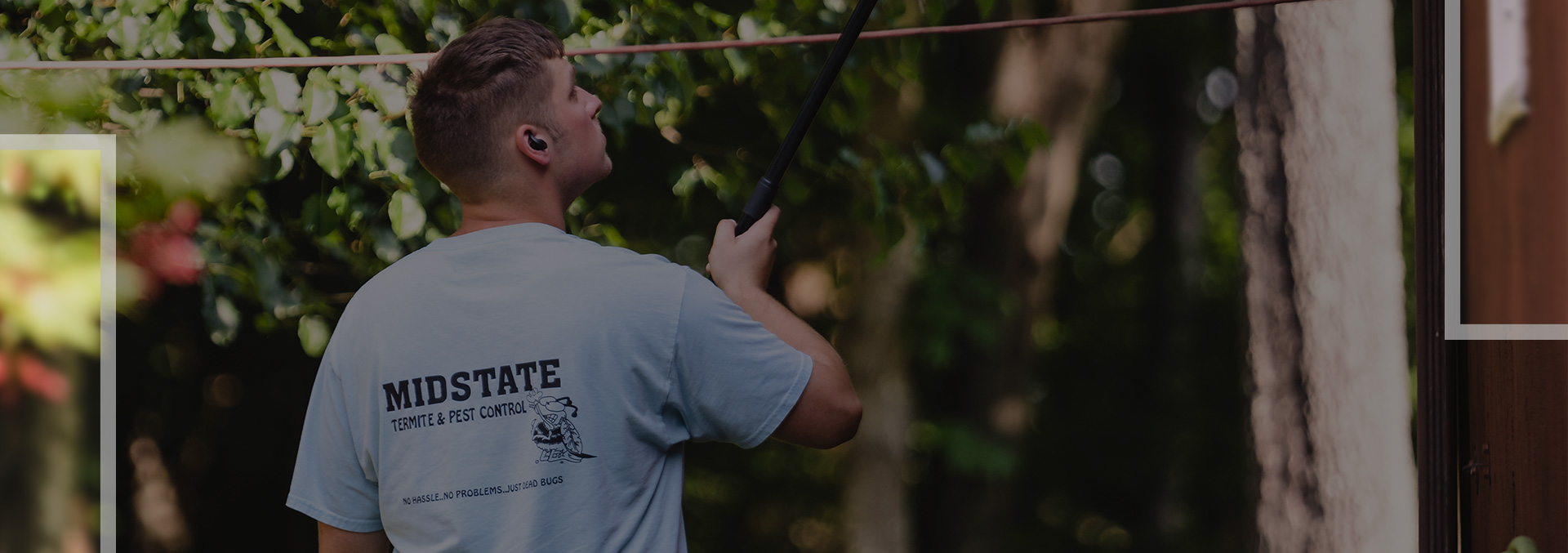
A perimeter barrier treatment applied to the exterior creates a residual insecticide layer across the specific zones where fall invaders congregate before entering: foundation perimeter, siding, window frames, door frames, eaves, soffits, and utility penetrations. Insects contacting the treated surface pick up enough of the residual product to be eliminated before they find a way in. The effective window for this treatment runs from late summer through early fall. Once temperatures drop and insects have moved inside, the window for outdoor treatment has closed for the season.
DIY contact sprays handle the individuals you see on the surface, but they don’t interrupt the pheromone recruitment cycle that brings more to the same entry points. Sealing entry points, combined with a professional exterior barrier treatment, breaks the cycle at both ends.
What's Covered in a Professional Fall Treatment
Targeted treatment areas include:
- Foundation perimeter at the base of the structure, where insects probe for ground-level gaps
- Siding surfaces on south- and west-facing walls that warm up first and attract the earliest congregators
- Window and door frames where weatherstripping gaps and frame joints are common entry points
- Eaves, soffits, and fascia where wasps build nests and beetles cluster above the roofline
- Utility penetrations, including pipe and conduit entry points that are rarely sealed tightly
Our Quarterly Pest Protection program covers Asian lady beetles, fall invaders, spiders, and rodents as part of a coordinated seasonal approach. The fall visit is timed to hit the treatment window before major swarming begins.
If you’re seeing the first signs of fall pest activity around your home, now is the right time to get ahead of it. Midstate Termite & Pest Control offers a free initial inspection with no pressure, so our technicians can assess what’s showing up on your property and what timing makes sense for treatment. Give us a call at (931) 286-7245.